
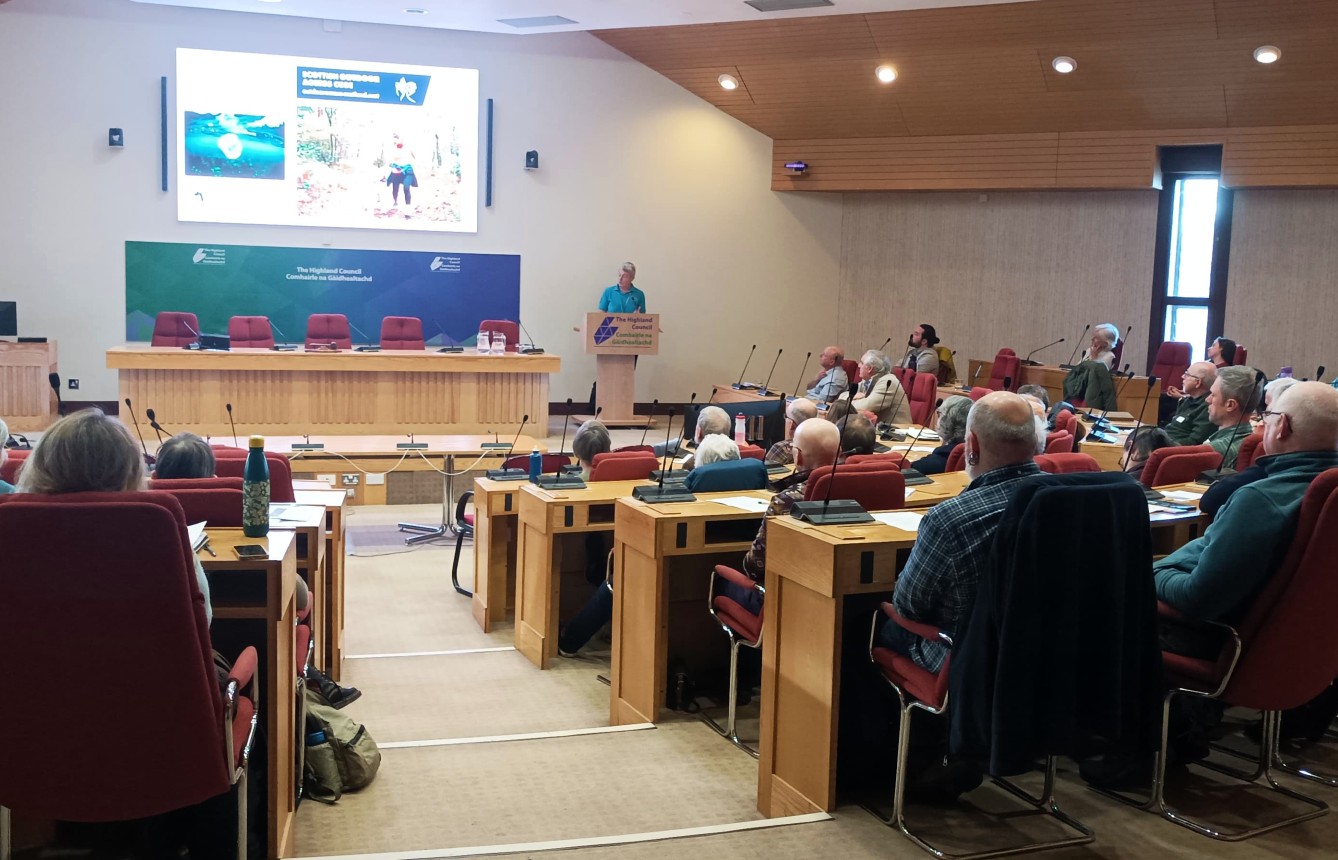
A sold-out Highland Biodiversity Conference took place at Highland Council HQ on Saturday 7 March 2026.
The conference was organised by Highland Council, the High Life Highland Countryside Ranger Service and the Highland Environment Forum, and was supported by Scottish Forestry.
The conference celebrated the positive impacts of Highland environmental projects over the last five years as part of the Highland Biodiversity Action Plan 2021-2026 and saw representation from partner organisations, community groups and volunteers, as well as attendance from MSP for Highlands and Islands Ariane Burgess.
Councillor Kate Willis, Chair of Highland Council’s Climate Change Committee, said: “Scotland is now recognised as one of the most nature depleted nations in the world, often cited as 212th out of 240 countries for biodiversity intactness, with only 56% of our biodiversity remaining. Whilst celebrating the fantastic progress that is being made and our continued shared ambition to make positive change, we must also acknowledge the scale of biodiversity loss to ensure that the Highlands can play a critical role in reversing this decline.
“This event was a fantastic opportunity to come together with optimism and forward-thinking and a chance for attendees to pause and reflect collectively on the success of the 2021-2026 Highland Biodiversity Action Plan. I look forward to working closely with colleagues at Highland Council and the Highland Environment Forum as we develop a new action plan for the next five years.”
Delegates heard from a range of speakers sharing updates on species and habitat restoration projects across the Highlands including peatland biodiversity, rainforest recovery, landscape restoration, and the power of volunteers and communities for locally led action.
Chris Puddephatt discussed the Assynt Elm Project which is raising awareness about the significance of the Wych Elm trees in Assynt, celebrating their cultural and ecological value as a key part of the west coast rainforest ecosystem. The project has safeguarded the area’s remaining ancient Wych Elms by planting locally grown saplings beside aging trees, protecting them from deer grazing to ensure the survival of the unique ecosystems they support. It has brought the community together through volunteer‑led planting, long treks to remote sites, and hands‑on involvement from local school children, strengthening local stewardship. The project has raised awareness of the elms’ ecological and cultural significance, supported by scientific input from the Royal Botanic Garden Edinburgh and an extensive photographic record that captures every remaining tree. Together, these efforts have created a practical model for how community action, science partnerships and intergenerational involvement can protect a highly threatened tree species and the Atlantic rainforest habitat it represents.
Jon Mercer also talked about the Arkaig Community Forest and how a small community have been driving change with long-term restoration efforts to restore and revitalise an important Scottish rainforest containing a key fragment of Scotland’s remaining Caledonian pinewood. The main achievements of the project have been the removal of non-native trees, setting up a tree nursery to provide locally sourced saplings from pine woodland seeds, the establishment of a deer larder to distribute venison from deer culling and partnership working in the larger catchment area.
Imogen Furlong, Head of Countryside Services at High Life Highland, said: “The conference reminded us that restoring nature isn’t only about large‑scale projects, it’s also about individual choices. Every record submitted, every patch of habitat improved, every community project supported adds momentum. When people feel empowered to act, the Highlands benefit from thousands of positive decisions that help nature recover.”
Caroline Vawdrey, organiser of the Highland Environment Forum, added: “The conference really showed the depth of knowledge and dedication we have across our communities, organisations and volunteer networks. As we start shaping the next Biodiversity Action Plan, it’s vital that we listen widely and involve the people who work with nature every day. The discussions we had at the conference are exactly the kind of conversations we need to guide that process.”