The Highland Council has agreed a coordinated approach to protect communities and strengthen climate and energy resilience across the region.
To help deliver this, the Council will continue to work closely with governments, regulators, energy network operators, developers and investors, to secure fair outcomes and long-term benefits for Highland communities at the centre of the UK’s transition to renewable energy.
This includes writing to the Scottish Government to seek clarity on future funding for flood protection schemes, with 29 communities already identified as being at risk from coastal erosion in Highland.
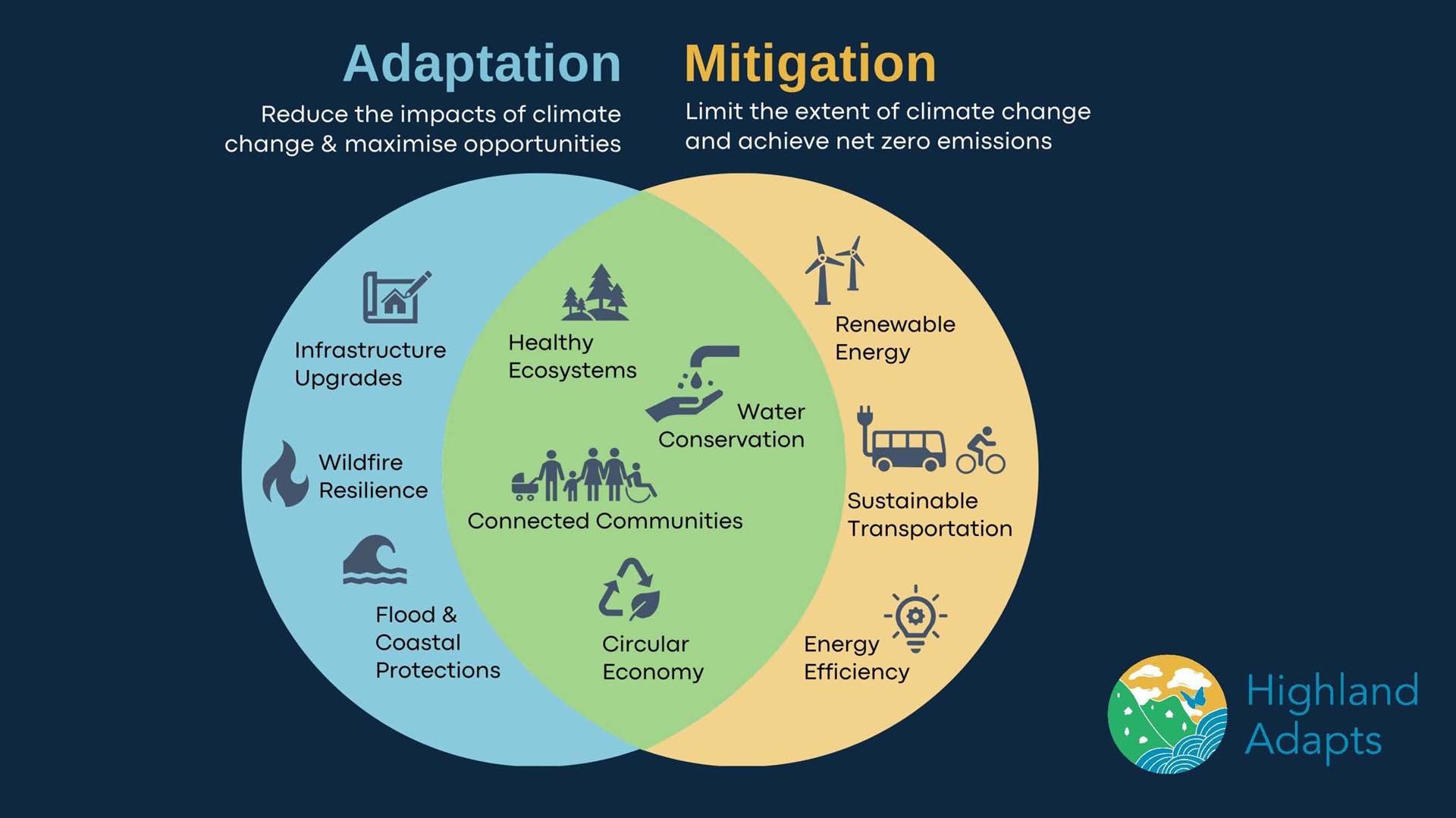
At today’s meeting of the full council, councillors agreed the new, place-based approach, which will bring together work to cut greenhouse gas emissions and support the transition to renewable energy; prepare for climate risks such as flooding, coastal change, severe weather, drought and wildfire; and to plan investment in areas like housing, schools and transport, within one strategic framework.
This work will be led by the Council’s climate change and energy team, ensuring climate action, infrastructure planning, and investment are joined up across Council services.
Climate change is already affecting communities, infrastructure and public services across the Highlands. Without action, the economic impact could be significant, with estimates suggesting the value of the region’s economy could reduce by around 1.5% each year by 2050, increasing to more than 3% by 2080. Flood-related damage already costs £1 million per year and could rise to £20 million by 2050. Storm damage alone has cost the Council £895,000 so far in 2025/2026.
At the same time, the region generates substantially more renewable energy than it consumes, yet many households continue to face high energy costs. Across the Highlands, 47% of households experience fuel poverty compared with 24 per cent nationally, and 33% experience extreme fuel poverty compared with 12% nationally. Nearly two thirds of homes are off the gas grid and rely on electricity, which is three to four times more expensive than mains gas.
Councillors agreed to set up a short term members working group to explore ways the Council can mitigate the impacts caused by fuel poverty on Highland residents.
Derek Brown, the Council’s Chief Executive, said: “An important part of the approach agreed by Highland Council is to have a structured conversation about the future with our young people, who will live with the consequences of decisions made on their behalf by leaders both nationally and locally. Hearing their voices and helping them to develop their understanding of the relationship between the things we need to do to mitigate climate change and the actions needed to adapt to future climatic challenges, is critical. We look forward to this vital area of future work with them and will bring forward plans for this in due course.”
Malcolm Macleod, the Council’s Assistant Chief Executive – Place, said: “Climate change pressures are set to continue, with impacts including loss of land and property, damage to transport infrastructure, increase flood risk, rising insurance pressures, and disruption to essential services. This practical, coordinated approach allows us to respond proactively to these risks, strengthen the long-term resilience of our communities, and build a strong case for the level of national investment needed to meet the scale of the challenge. The work will also include developing proposals for a long-term delivery model.”
The Council has already taken steps to ensure communities benefit directly from renewable energy development through its Social Value Charter, which sets out clear commitments for long term community investment where projects are approved. The Invest Highland platform, which promotes the region as a prime location for growth and innovation and showcases community, local and regional investment opportunities, will now be expanded to include opportunities that support climate resilience.
Other ongoing work across the region includes improving the energy efficiency of homes, developing heat networks, renewable energy projects, delivering flood risk management schemes, connecting communities through sustainable transport, and investing in energy efficient schools and other infrastructure.
The Climate Change, Energy and Community Resilience report is available to view on the Highland Council website.