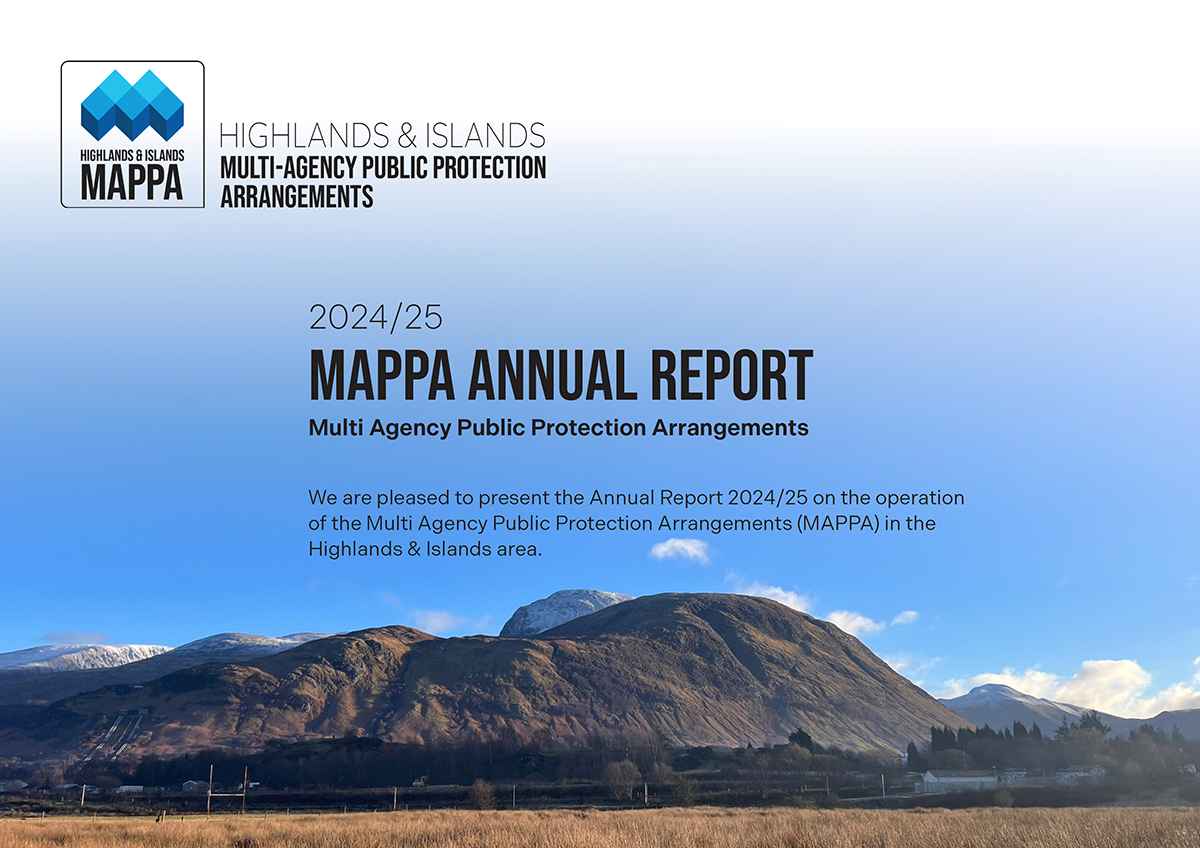
The Multi Agency Public Protection Arrangements (MAPPA) annual report for the Highland and Islands area for 2025/25 has been published by the Highland and Islands Strategic Oversight Group (HIMSOG).
Highlands and Islands MAPPA annual report - Highland Council
The MAPPA annual report sets out the operational and governance arrangements in relation to MAPPA within Highland and Islands, which are well established.
Independent Chair of HIMSOG, James Maybee said:
“The fundamental purpose of MAPPA is public protection and managing the risk of serious harm posed by certain individuals who have committed sexual and violent offences.
“Within Highland and Islands, the HIMSOG ensures that MAPPA is performing to the agreed standards set out in the Scottish Government MAPPA National Guidance (2022); and that the relevant authorities are working together to effectively reduce the risk that individuals subject to MAPPA pose to the community. HIMSOG also ensures that strategic planning is improving performance.”
He added: “The number of registered sex offenders returned to custody for breaching their statutory conditions remains very low at under 3% compared to the national average of approximately 6%. This is testament to the multi-agency work that underpins the successful operation of MAPPA. I am confident the collaborative efforts of all those involved in MAPPA will continue to keep our communities safe in the year ahead.”
Multi-Agency Public Protection Arrangements (MAPPA) are a set of statutory arrangements which primarily aim to maintain public protection and the reduction of serious harm.
There are eleven authorities which are responsible for the assessment and management of risk presented by offenders within the Highlands and Islands who are subject to MAPPA, they include:
- The Highland Council
- Orkney Islands Council
- Western Isles Council
- Shetland Islands Council
- Police Scotland
- Scottish Prison Service
- NHS Highland
- NHS Orkney
- NHS Eilean Siar
- NHS Shetland
- The State Hospital for Scotland
The annual report can be viewed online at: Highlands and Islands MAPPA annual report - Highland Council